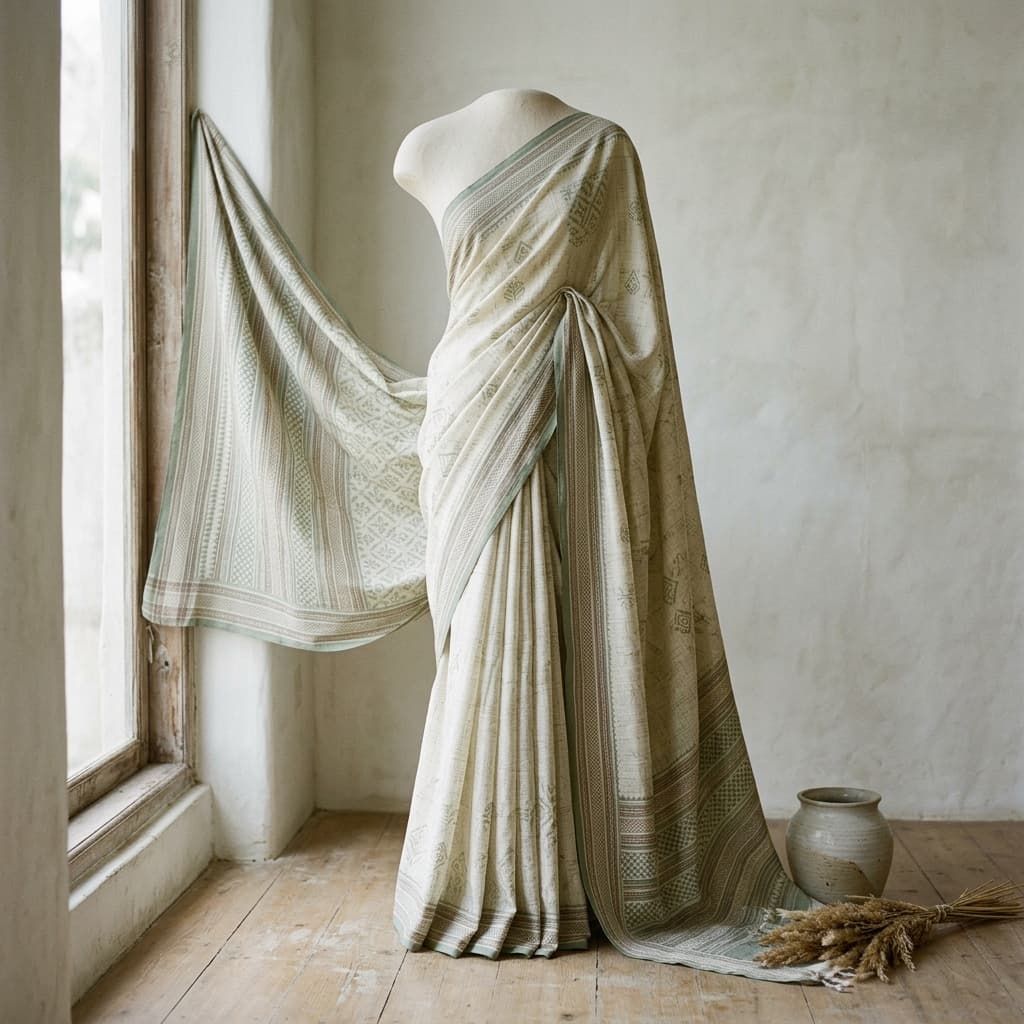
The beauty of the saree lies in its versatility. It is six yards of sheer potential. While India is home to over a hundred distinct regional drapes, the Nivi drape has become the classic silhouette recognized across the globe. Originating from the aristocracy of Andhra Pradesh, it was popularized in the late nineteenth century as a elegant, functional drape suited for active, modern lives.
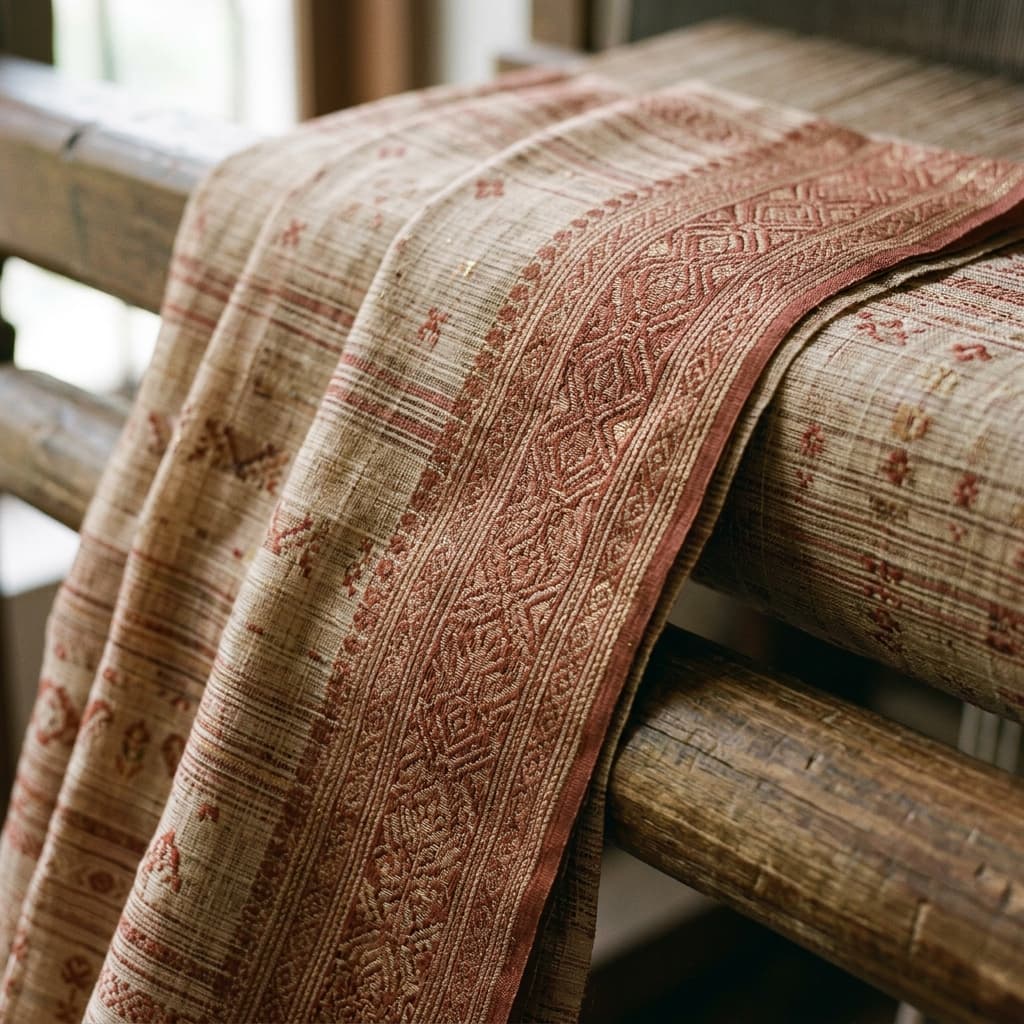
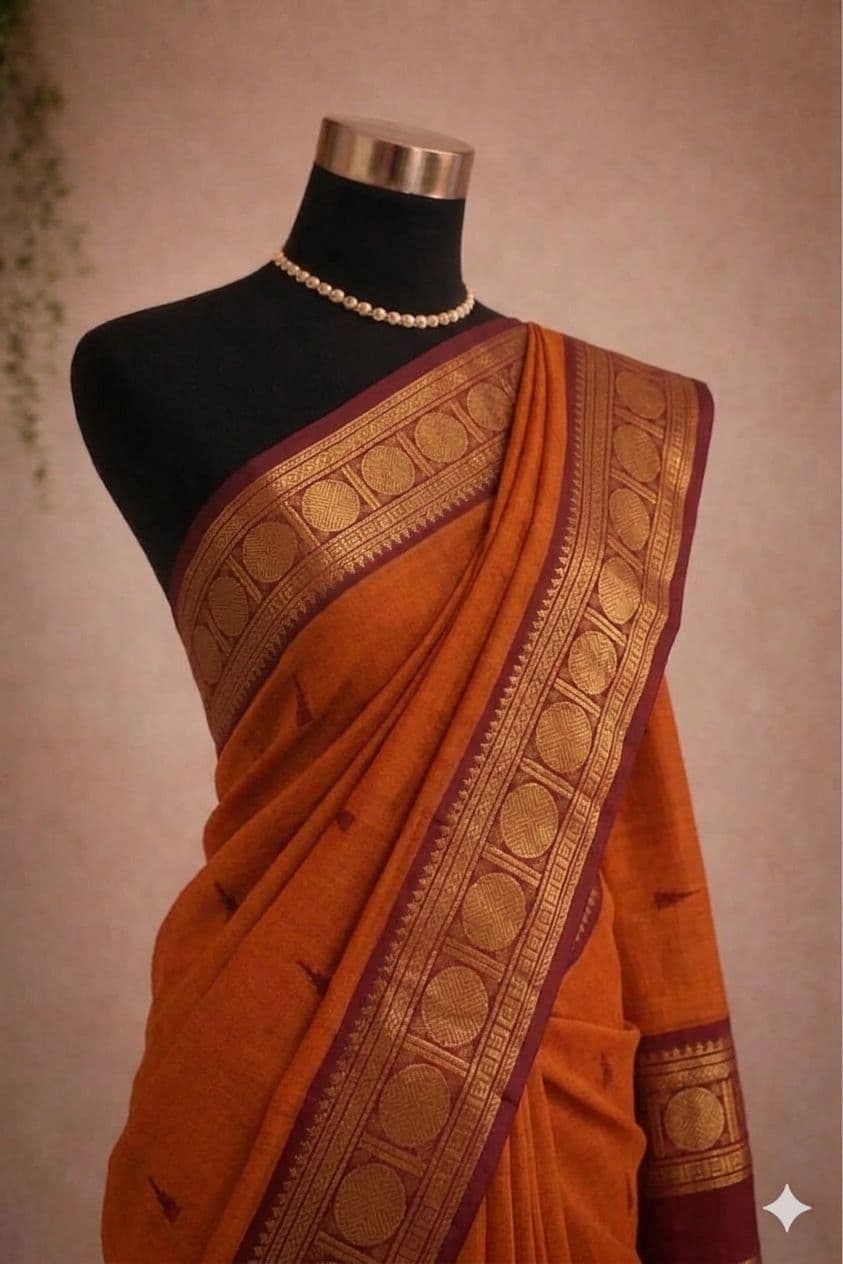
The Nivi drape is beautiful because it combines structure with flow. It features clean pleats tucked neatly at the navel, while the remaining fabric—the pallu—cascades gracefully over the left shoulder, showing off the intricate weave of the border.
To master the drape, begin by wearing a sturdy, well-fitting cotton underskirt and structured footwear to set the right height. Tuck the plain end of the saree in at the waist, rotating a full clockwise circle. Next, gather 5 to 7 equal pleats at the center, ensuring they face to the left. Tuck them firmly, letting the folds fall straight. Finally, gather the remaining fabric, bring it around the back under the right arm, and drape the pallu over the left shoulder, letting the gold-woven details shine.
The modern Nivi drape is highly experimental. We love styling a heavy cotton saree with a structured linen jacket, an oversized hand-knit sweater, or a simple raw silk shirt. A saree is a living canvas; wear it with confidence, breathability, and your own personal narrative.
"A saree is not a pre-stitched dress. It is a continuous stream of unstitched cloth that takes the shape of the wearer's mood, spirit, and posture."