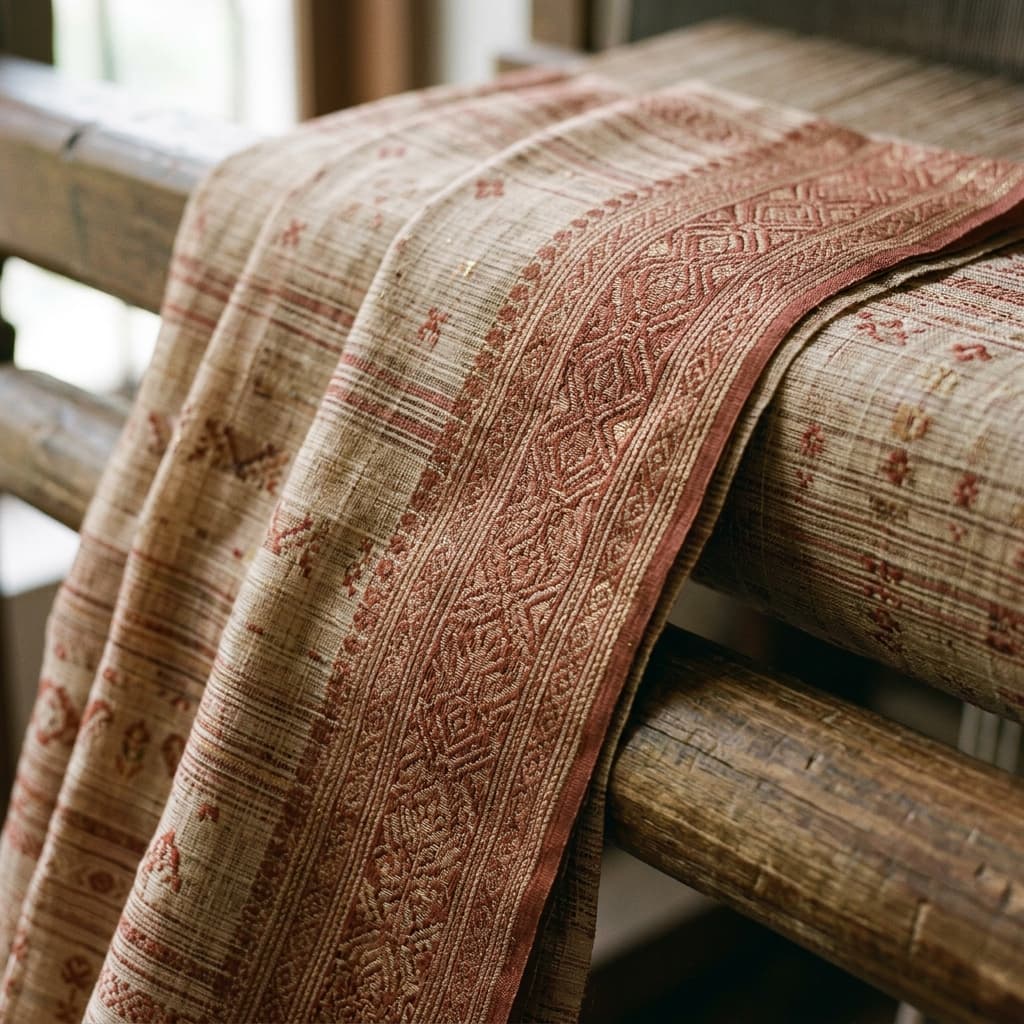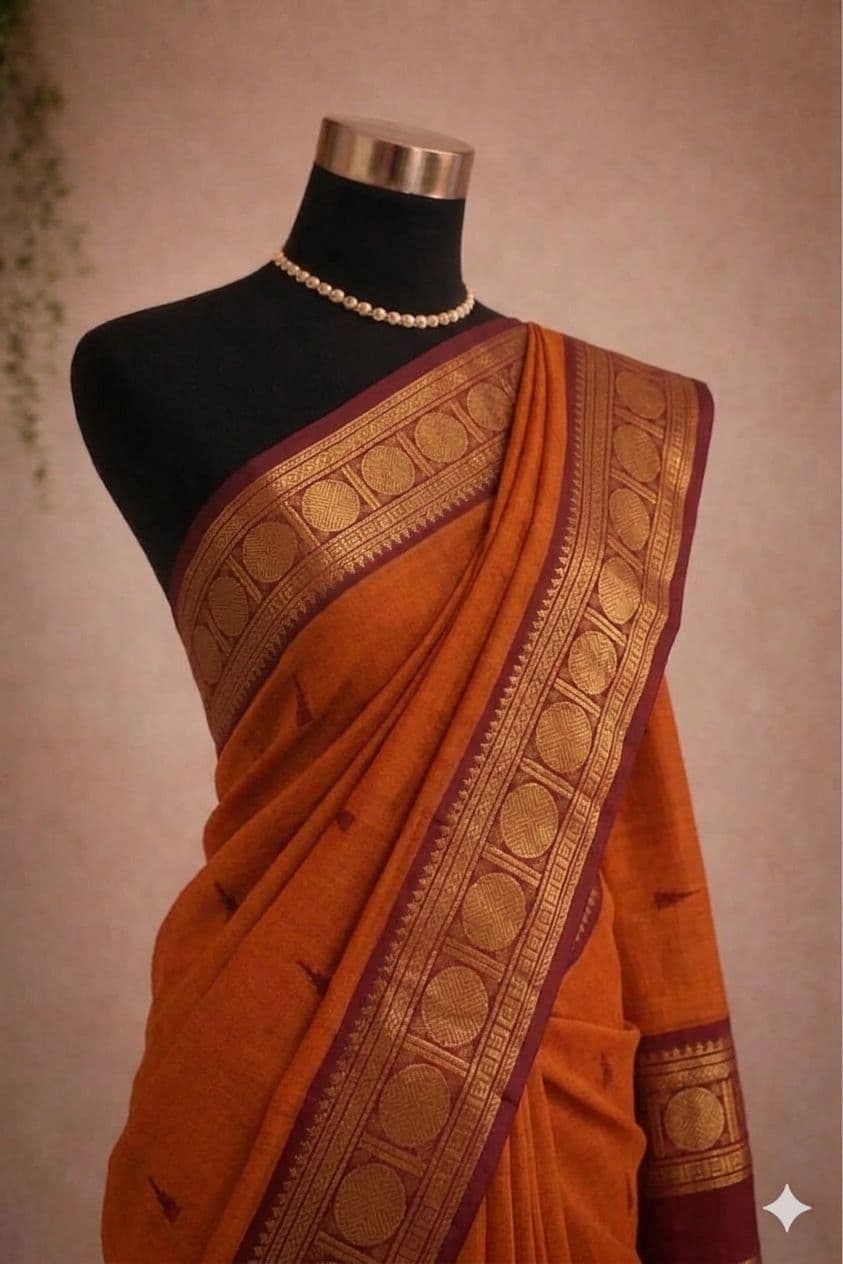
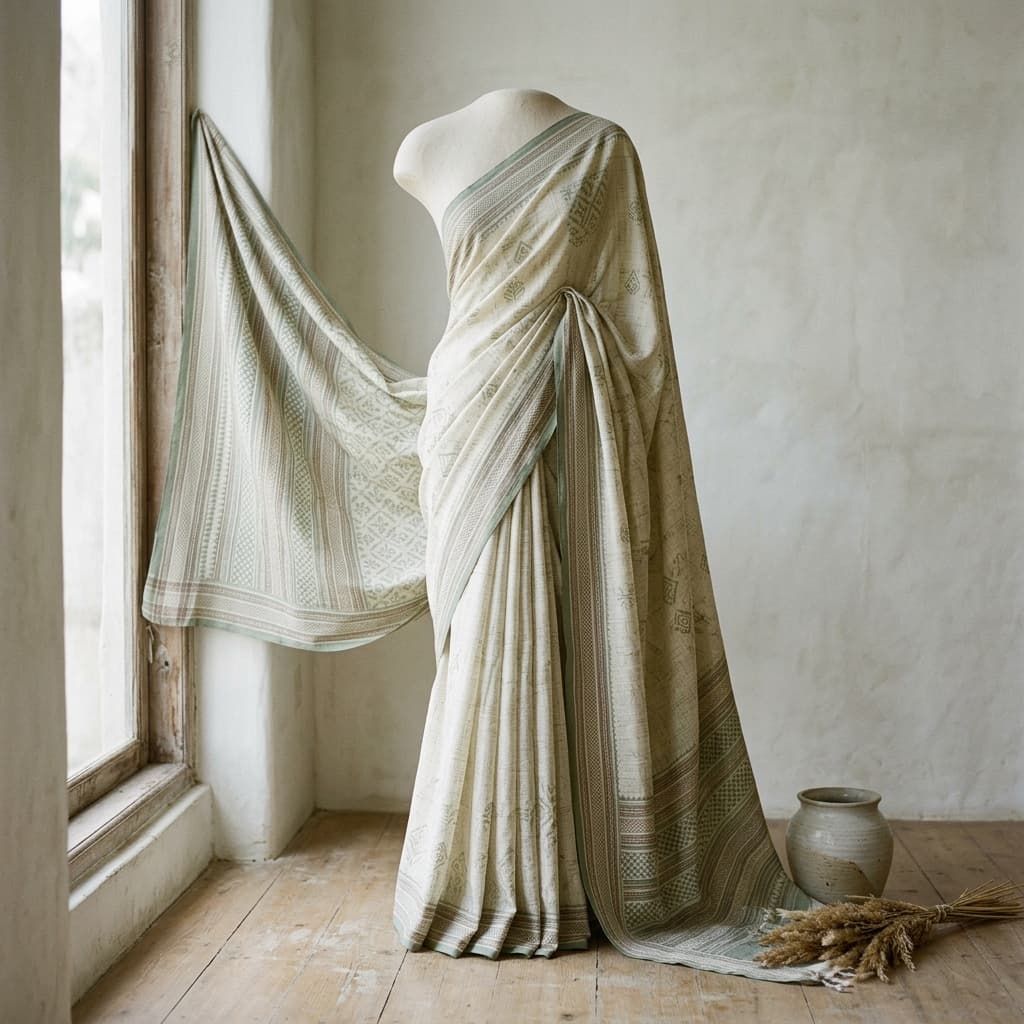
There is a silent grammar to the metallic threads of a saree. Zari is not mere embellishment; it is a metallic archive of trade routes, royal patronage, and weaver bloodlines. Long before synthetic polyester yarns flooded the market, real zari was a heavy, structural marvel of pure gold and silver wire drawn so finely it could be interwoven with raw silk.
The origin of the word itself stems from 'zar', the Persian word for gold. Brought into the subcontinent through royal courts, the art of drawing metallic wire found its spiritual home in Surat, Gujarat. Here, master wire-drawers (called Kasabkar) would wrap pure silver wire around a core of silk thread, then electroplate it with twenty-four carat liquid gold. The resulting thread was resilient, supple, and carried a weight that made a saree drape with a heavy, fluid majestic majesty.
Today, authentic zari is an endangered craft. In our visits to Kanchipuram's master weavers, we observed the strict adherence to the classic three-part zari: a silk core, wound with 57% silver wire, and gilded with 0.5% pure gold. When you run your hand along a heritage vadhra border, you are not touching paint or plastic. You are holding metallic thread spun under the patience of three different artisan guilds.
For the collector, real zari has a signature. It never rusts or peels; instead, it develops a deep, warm antique bronze patina over generations, growing more beautiful as it ages. It is a quiet testament to slow, honest luxury.
"Gold does not need to shout. When it is real—when it is pure gold and silver—it simply whispers its ancestry in the flicker of candlelight."