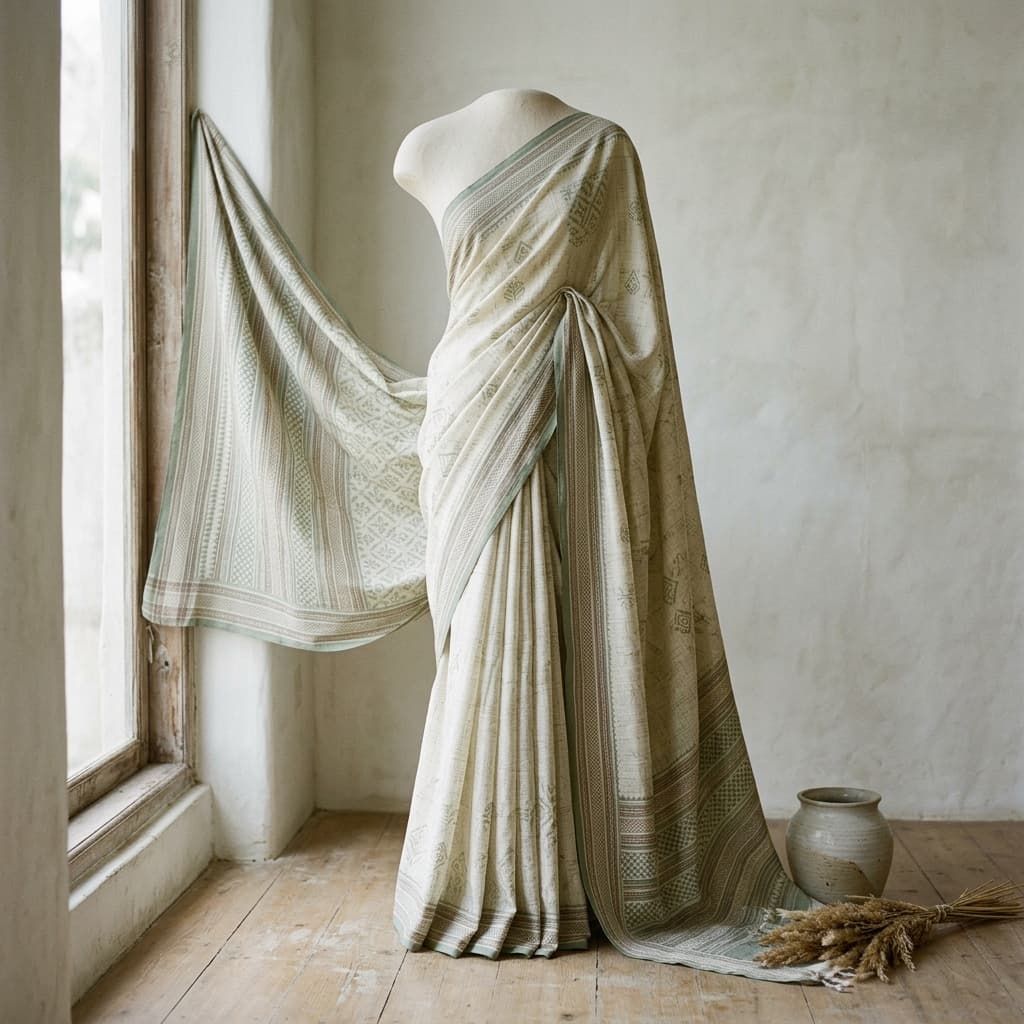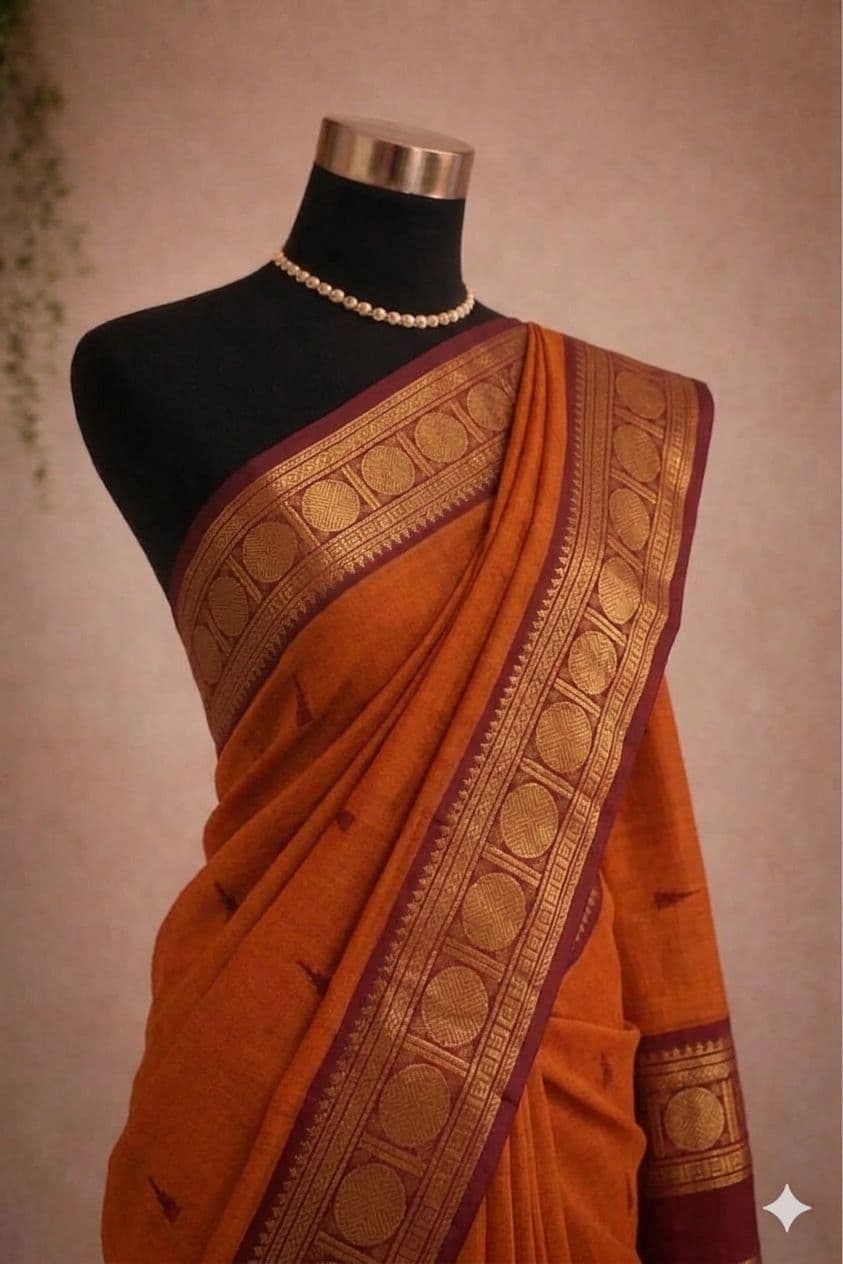
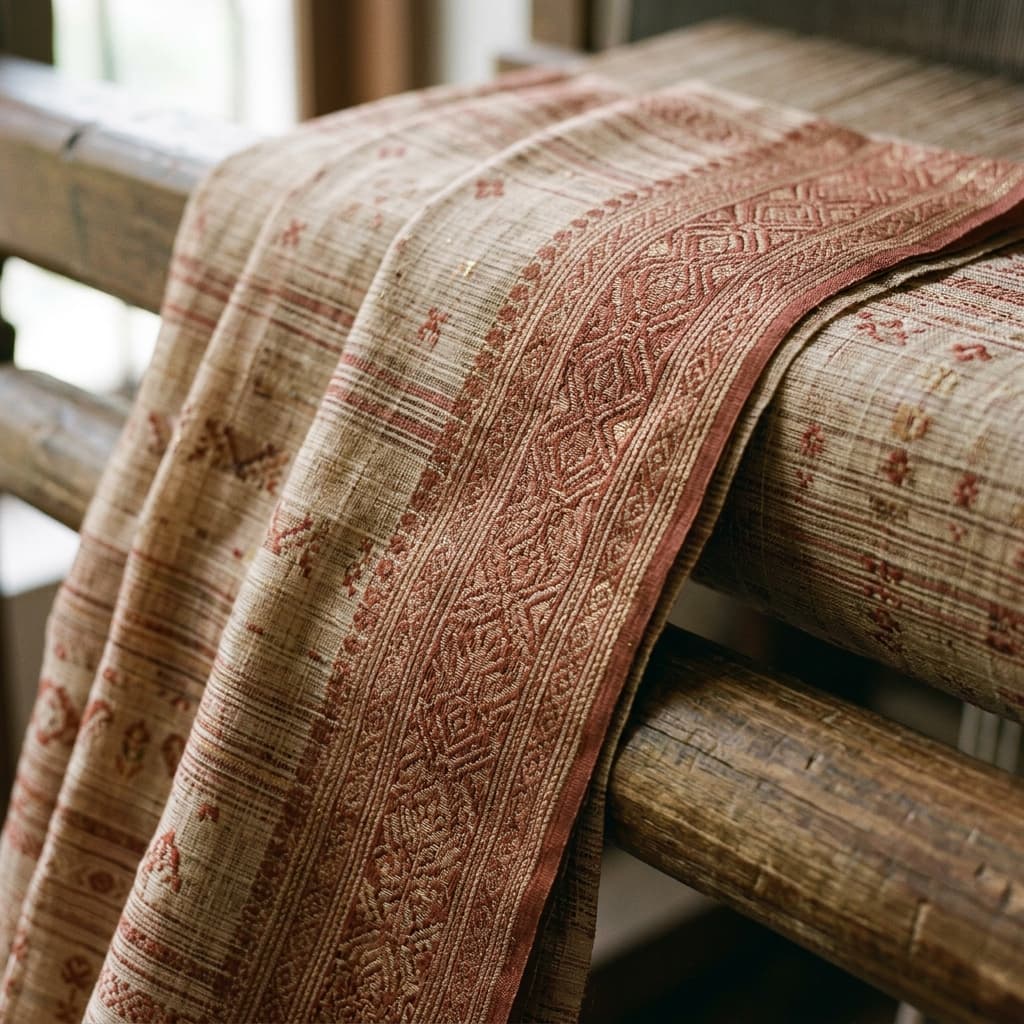
In the contemporary fashion ecosystem, speed is treated as a virtue. Clothes are conceived, manufactured, worn, and discarded within a span of weeks. Against this breathless rush, the handloom stands as a quiet but radical act of resistance.
To watch a weaver work is to witness a form of meditation. The rhythmic thud-clack of the handloom shuttle is a heartbeat. A single master artisan can produce no more than two to three inches of detailed saree fabric in a full day of focused labor. There are no computer algorithms, no automated hydraulic presses—only the alignment of eyes, hands, and feet on wooden treadles.
This slow cadence is where the magic of character is born. In a handwoven textile, no two square inches are identical. There are tiny, organic variations in the tension of the weave, subtle shifts in the dye intensity, and micro-textures that tell you a human hand completed this path. These are not flaws; they are the thumbprints of the artist.
Choosing a handloom saree is a conscious shift in perspective. It is an agreement that a garment should carry weight, story, and respect. When we buy slow, we buy a relationship with a maker, a weaver, and a legacy that outlasts transient global trends.
"The handloom does not keep time by the clock. It keeps time by the stroke of the wooden shuttle and the deep rhythm of human breathing."