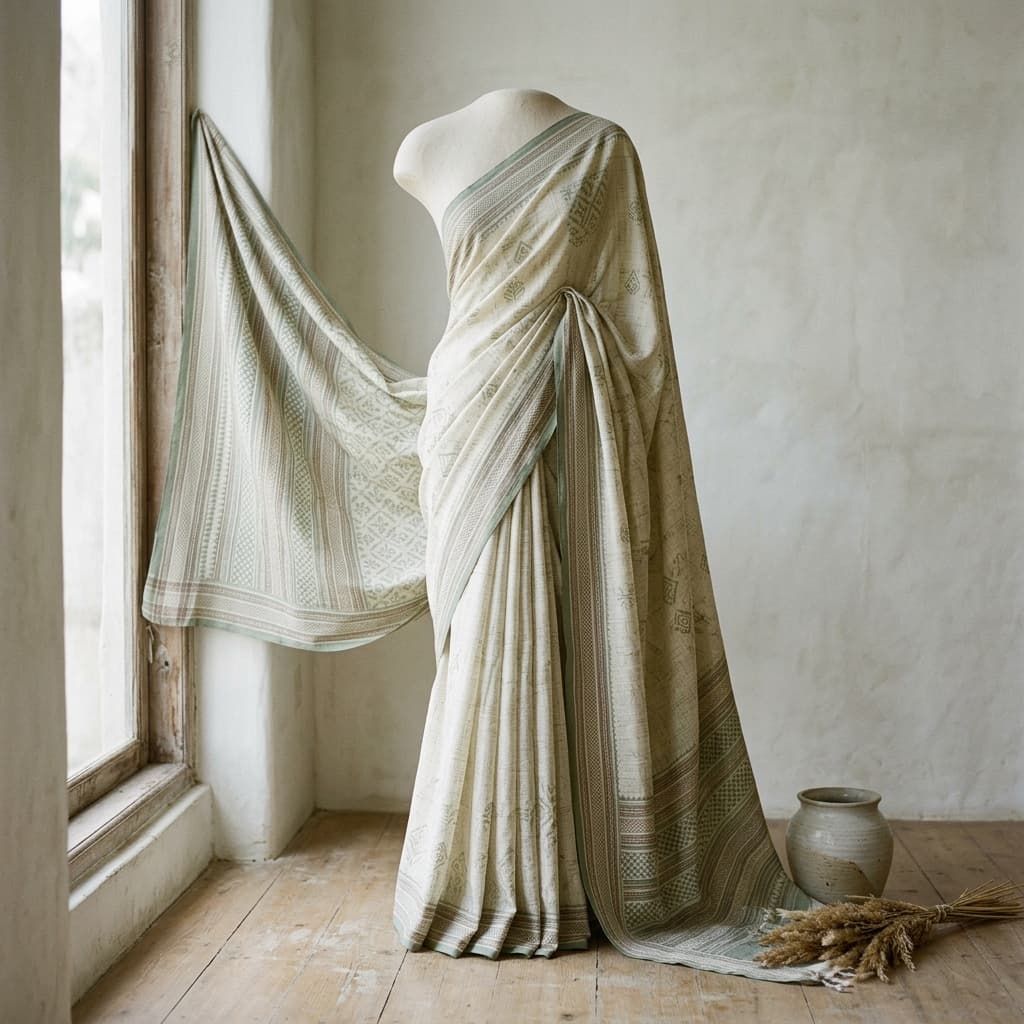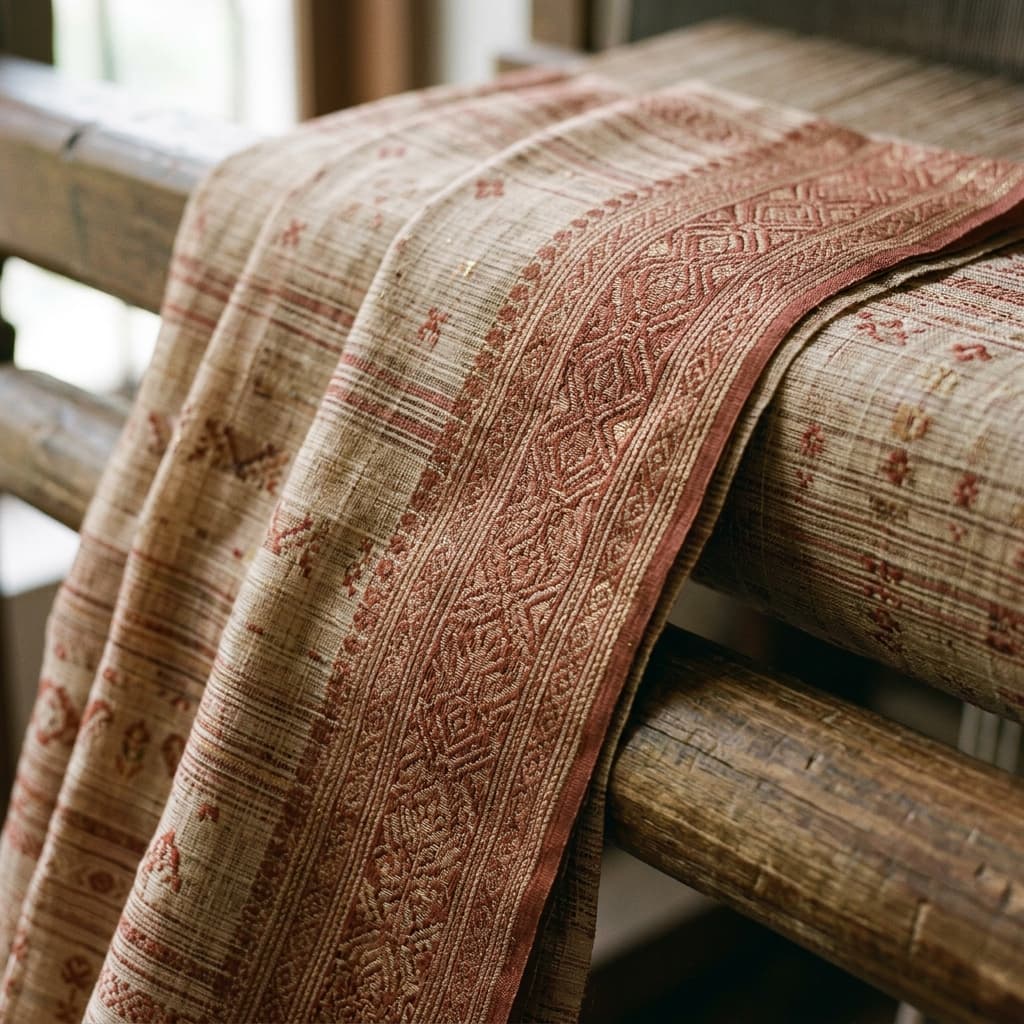
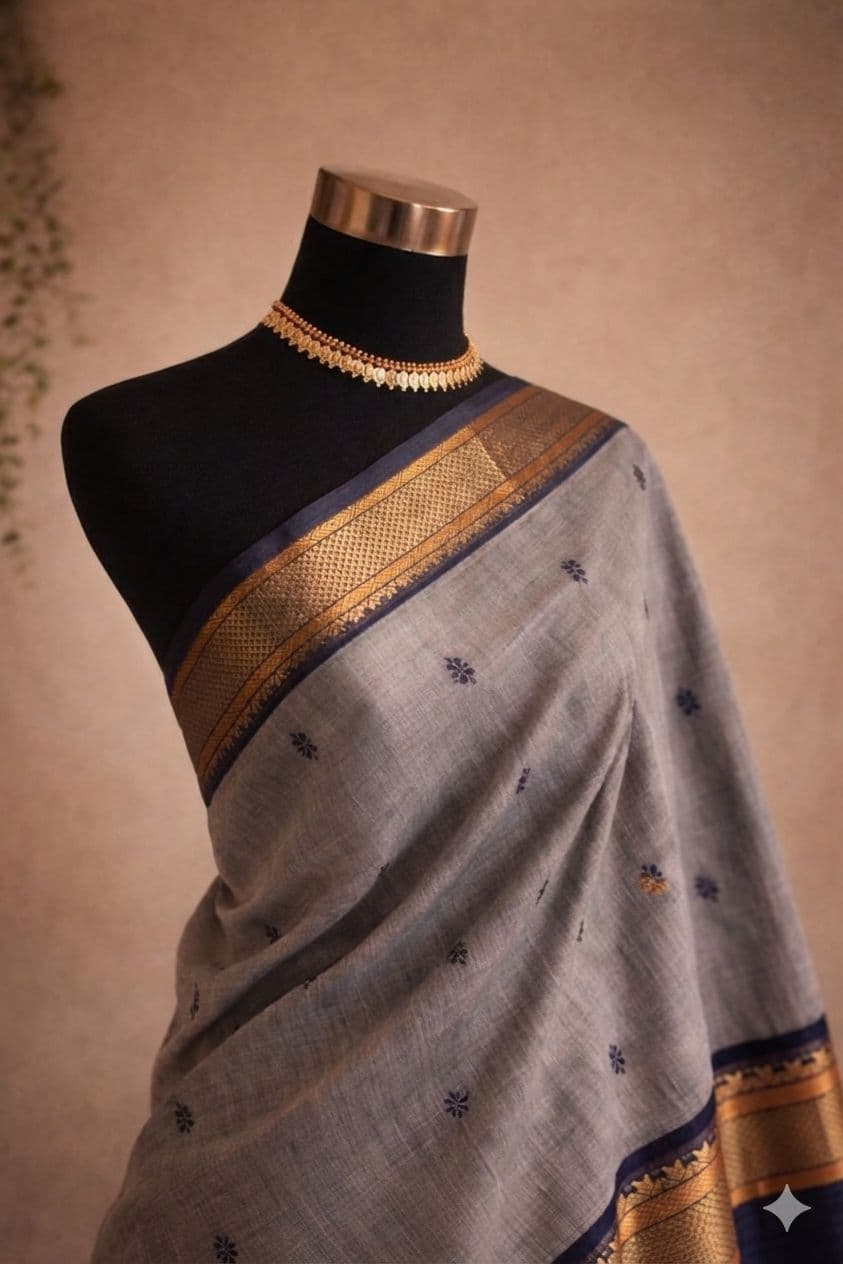
Kanchipuram, the city of a thousand temples, smells of jasmine, incense, and wet starch. In the tiny, high-ceilinged front rooms of traditional houses, giant jacquard looms take up almost all the physical space. Here, families have spent centuries weaving Kanchipuram silk—the undisputed queen of Indian handlooms.
What distinguishes a Kanchipuram saree is the triple-ply silk thread (made by twisting three silk filaments together) and the legendary 'Korvai' weaving technique. Korvai is the art of interlocking the border and body of the saree when they are woven in contrasting colors. It requires two weavers sitting on either side of the loom, passing the shuttles back and forth in perfect synchronization. The join is so strong it resembles a clean zig-zag temple wall (called temple gopuram).
During our field visit, we met Murugesan, a 64-year-old master weaver. He sat on his wooden bench, his feet moving like a seasoned pianist across the treadles. 'This loom was built by my grandfather,' he told us. 'Every warp and weft is a conversation between me and my ancestors. We do not weave for money; we weave because silk is our deity.'
As younger generations migrate to technology hubs, the preservation of the Korvai technique rests on a dwindling number of hands. Supporting these artisans is not charity; it is the active preservation of a living museum of human capability.
"A Kanchipuram silk saree is not woven in a factory. It is woven inside the homes of artisans, where the sound of the loom forms the soundtrack of childhood."